Comforters are insulating bedding layers designed to provide warmth and comfort while sleeping. Their materials, weight, and construction influence how they feel across seasons and sleeping preferences. Understanding these characteristics can help distinguish a comforter from related bedding such as blankets and duvet covers, and clarify how each layer contributes to a comfortable bed.
Comforter fill may include natural fibers, down, or synthetic materials, each with different properties for warmth, breathability, and maintenance. A lighter comforter can suit sleepers who prefer less insulation or want a layer for milder conditions. Fabric construction and stitching also affect how evenly the fill stays distributed over time.
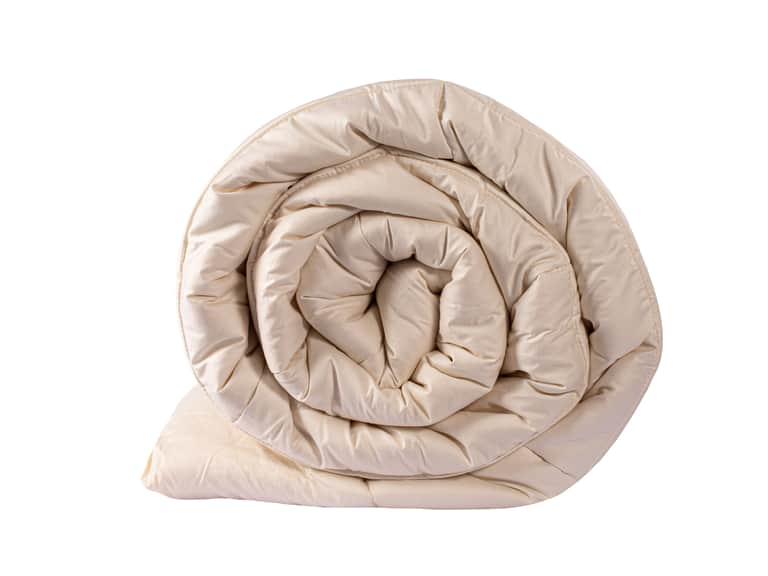
The Sleep and Beyond myMerino Wool Comforter Light uses Merino wool fill in a lightweight design. Wool naturally helps manage moisture and temperature, while its breathable structure can support comfort in changing sleep conditions. Its lighter insulation makes it relevant for people seeking a less-weighted bedding layer than a warmer, heavier comforter.
Comforter care depends on the materials and the manufacturer’s instructions. Wool-filled products may require gentler handling than some synthetic alternatives, so checking the care label before cleaning is important. Using a suitable duvet cover can help protect the comforter from everyday soil and reduce the frequency of direct cleaning.
Comforters work alongside other bedding to create a coordinated sleep setup. Sheets provide the layer closest to the body, while pillows support head and neck positioning; duvet covers can protect and enclose compatible inserts. When considering broader bedding needs, material preferences may also relate to organic mattresses and the desired feel of the sleep environment.
 Bedding